


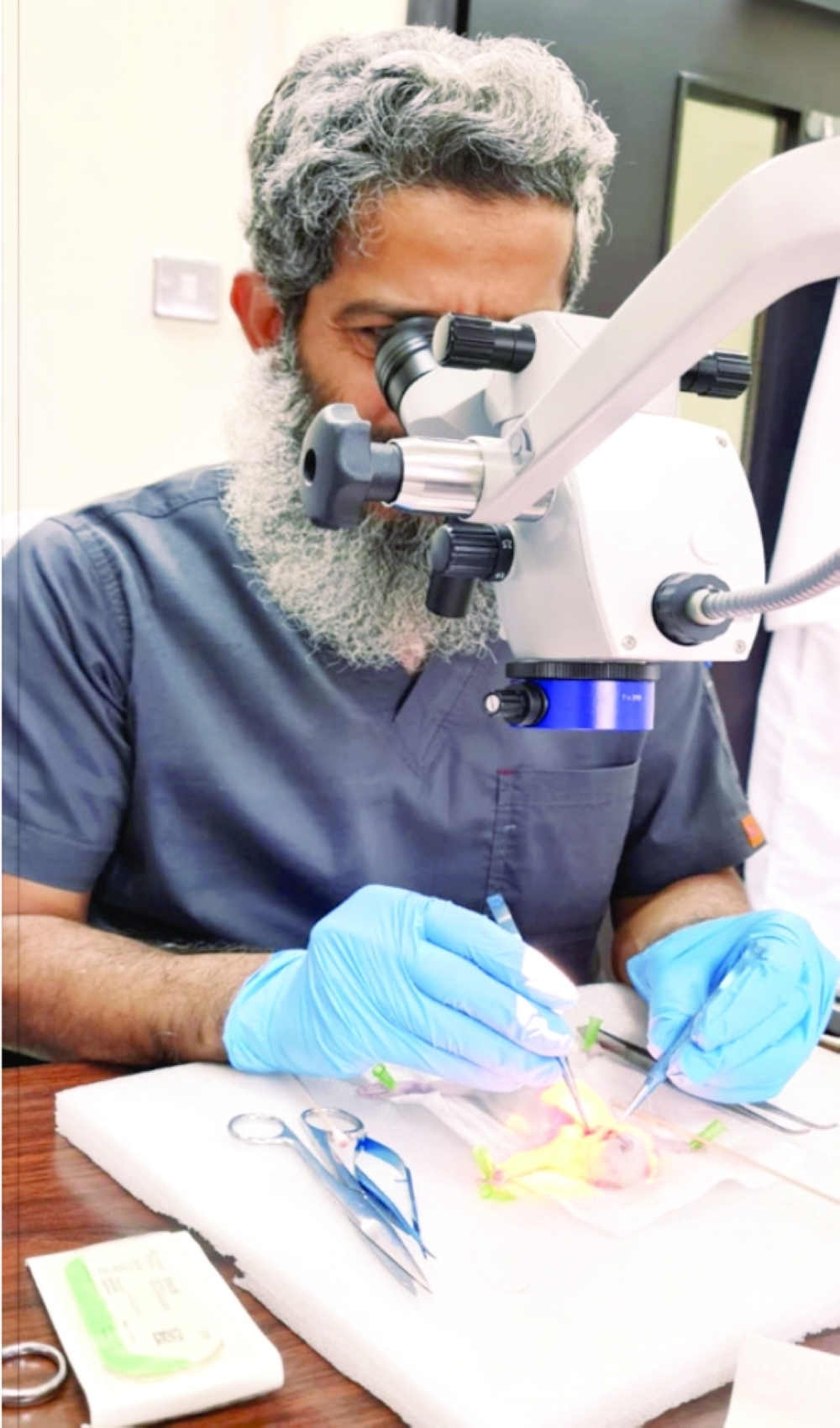





MUSCAT: A pioneering research project has found better treatment of chronic wounds through 3D printing technology. It won the 12th National Research Award in the Health and Social Services field under the PhD category, organised by the Research and Innovation Authority.
Dr Sulaiman bin Ali al Hashmi, Head of the Laboratory for Stem Cells and Regenerative Medicine at the University of Nizwa, and his team developed a novel 3D-printed wound dressing made from a natural biomaterial known as carboxymethyl chitosan combined with tacrolimus, a bioactive drug. The dressing was specifically engineered to combat bacterial infection, promote new blood vessel formation and support healthy skin regeneration, ultimately improving overall wound healing outcomes.
“Winning the National Research Award is a great honour for us. It represents national recognition and trust in the quality and impact of our research. This award motivates and encourages our team to go further while also placing a responsibility on us to ensure that our research moves beyond the laboratory and contributes to real solutions for patients. It challenges us to translate our scientific findings into practical medical applications that can improve healthcare and quality of life,” he said.
Laboratory tests demonstrated that the newly developed dressing is safe for cells and effectively stimulates blood vessel growth while showing strong antibacterial activity. In animal studies, wounds treated with the new dressing healed significantly faster than those treated with a commercially available wound dressing. The results revealed improved skin regeneration and enhanced vascular development, highlighting the strong potential of this bioactive scaffold for managing chronic wounds and offering a promising alternative to conventional treatments.
Dr Sulaiman recommended further testing in chronic wound models to confirm long-term effectiveness, as well as continued optimisation of the scaffold design to enhance healing performance and infection control. The research team also aims to advance the technology towards clinical translation and eventual commercialisation as an innovative medical wound care product.
The study was published in the Journal of Drug Delivery Science and Technology, a Q1-ranked international scientific journal with an impact factor of 4.9, reflecting the high quality and global relevance of the research. The project was conducted by a multidisciplinary team comprising Dr Sulaiman, Saeid Vakilian, Dr Fatemeh Jamshidi-adegani, Juhaina al Kindi, Fahad al Fahdi, Dr Abdullah al Hatmi, Habib alJahdhami, Dr Muhammad Anwar, Dr Nasar al Wahaibi, Dr Asem Shalaby and Prof Ahmed al Harrasi.
Oman Observer is now on the WhatsApp channel. Click here


